


View neighbourhoods on the map
Toronto is a city for walking enthusiasts. There is plenty of room here for your soul (and feet) to roam, and plenty to delight the eye. In the blink of an eye, you can travel from one era to another and discover the cultures of different peoples. Here is a guide to the city's most interesting neighbourhoods, which will help you get to know Toronto better.
Downtown
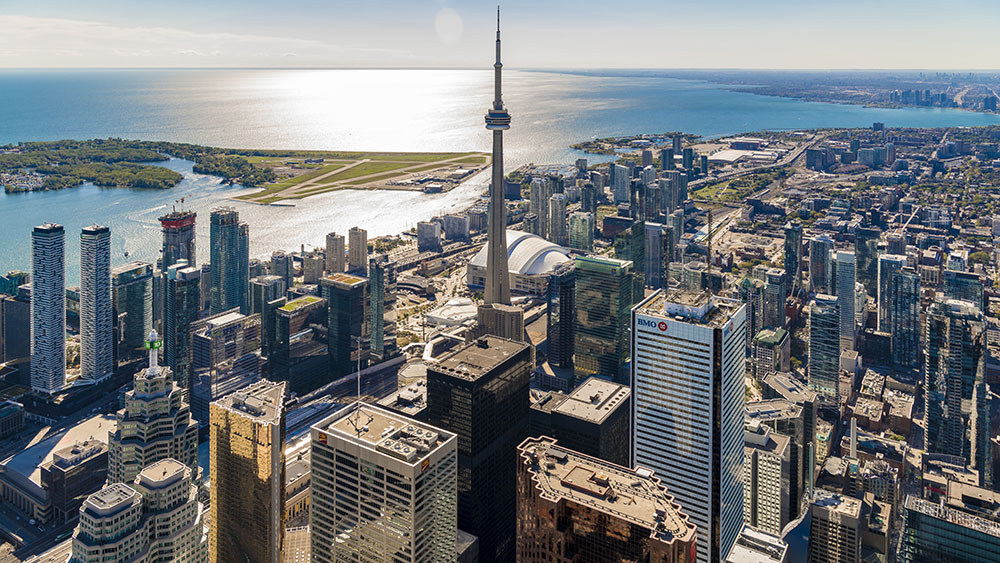
Downtown is considered the city's main neighbourhood and, in turn, includes several smaller neighbourhoods. It covers about 17 square kilometres. Downtown is famous for its skyscrapers, which rank third in North America by height, surpassed only by those in New York and Chicago. Ontario's main legislative body, Toronto City Hall, is located here.
Yonge–Dundas Square is one of the city's main attractions and is also located downtown. It is lit by numerous LED screens covered with bright signs, advertisements and logos. The well-known Eaton Centre mall faces the square. According to 2015 data, the shopping centre's annual visitor count exceeded the annual passenger count of one of Canada's largest and busiest airports, Toronto Pearson International Airport. Major festivals and shows are often held in the square.
Financial District
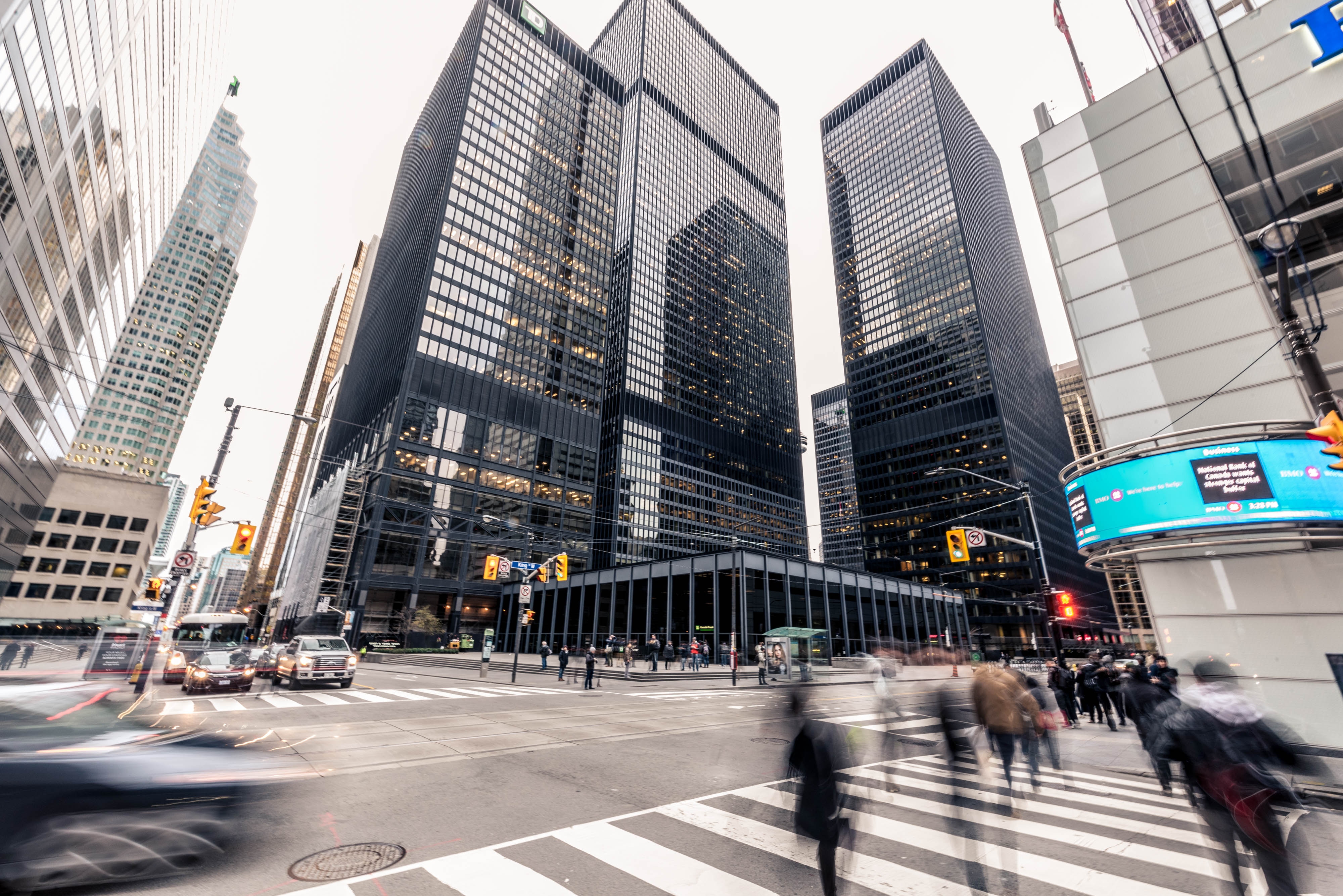
The Financial District is downtown's most important neighbourhood, as it is the centre of the city's entire business life.
This is where the Toronto Stock Exchange is located. It is considered the largest in Canada and ranks seventh in the world by market capitalization. The offices of the largest banks, law firms and various globally renowned corporations are also located here. The PATH network runs beneath the high-rise office buildings. It connects more than 70 buildings through underground pedestrian tunnels and shopping areas.
Entertainment District
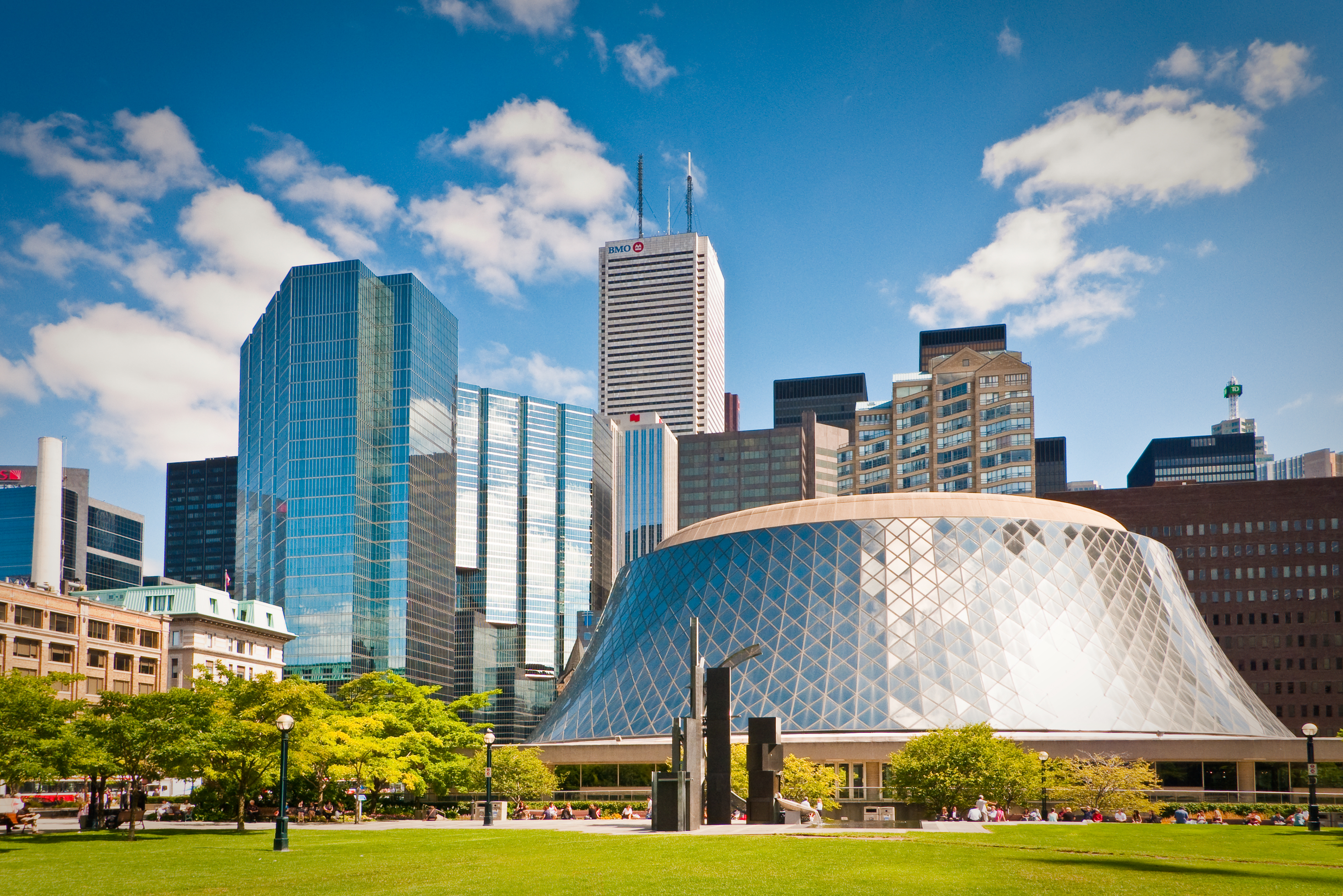
West of the Financial District begins the Entertainment District: restaurants, nightclubs, sports facilities, boutiques, hotels, theatres and more. In the past, the neighbourhood was home to industrial enterprises, but in the 1980s it was redeveloped for entertainment purposes. The neighbourhood's distinguishing feature is its abundance of theatres and arts centres: Royal Alexandra Theatre, Princess of Wales Theatre, Roy Thomson Hall and so on. In September, the neighbourhood transforms into a venue for the Toronto International Film Festival, and its streets often host well-known actors, directors and other figures from the arts.
Yorkville
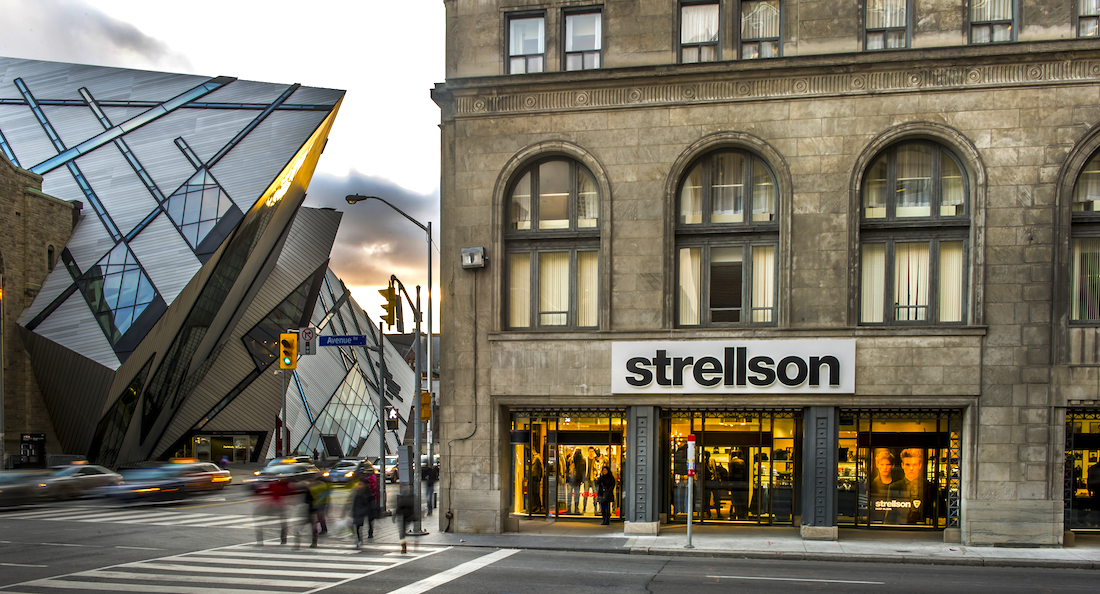
If you are looking for luxurious and exclusive shopping, head to Yorkville, as it is home to the Mink Mile—a shopping district with the city's most luxurious boutiques and restaurants. The best-known brands are represented here: Burberry, Prada, Gucci, MAC Cosmetics, Hugo Boss, Chanel, Hermès, Louis Vuitton, Holt Renfrew, Tiffany & Co and many others. The neighbourhood is also known for its upscale hotels: InterContinental Toronto Yorkville, Four Seasons, Park Hyatt, Hazelton Hotel, Windsor Arms Hotel, Residence on Bay and Toronto Marriott Bloor Yorkville Hotel.
One of Toronto's most attractive attractions, the Royal Ontario Museum (ROM), is located just west of Yorkville. It is Canada's largest museum and the fifth-largest museum in all of North America.
Church and Wellesley
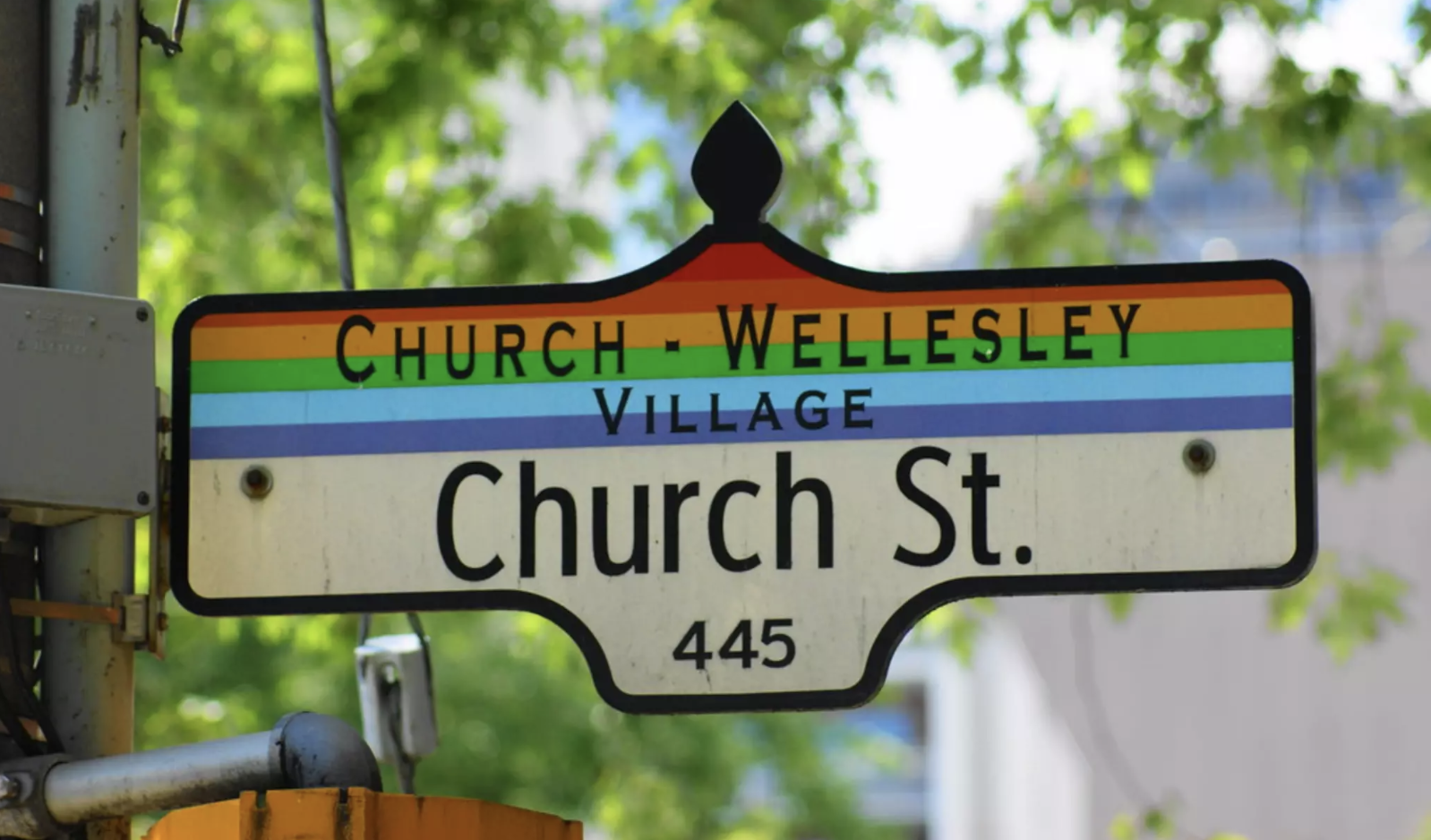
Church and Wellesley is Toronto's LGBT enclave. Every year, it hosts the Pride Parade, attended by thousands of members of sexual minorities. The event usually takes place on the last weekend of June, but preparations for the celebration last throughout the month. The neighbourhood is recognizable by its LGBT symbolism: pedestrian crossings and street-name signs are painted in rainbow colours.
Harbourfront
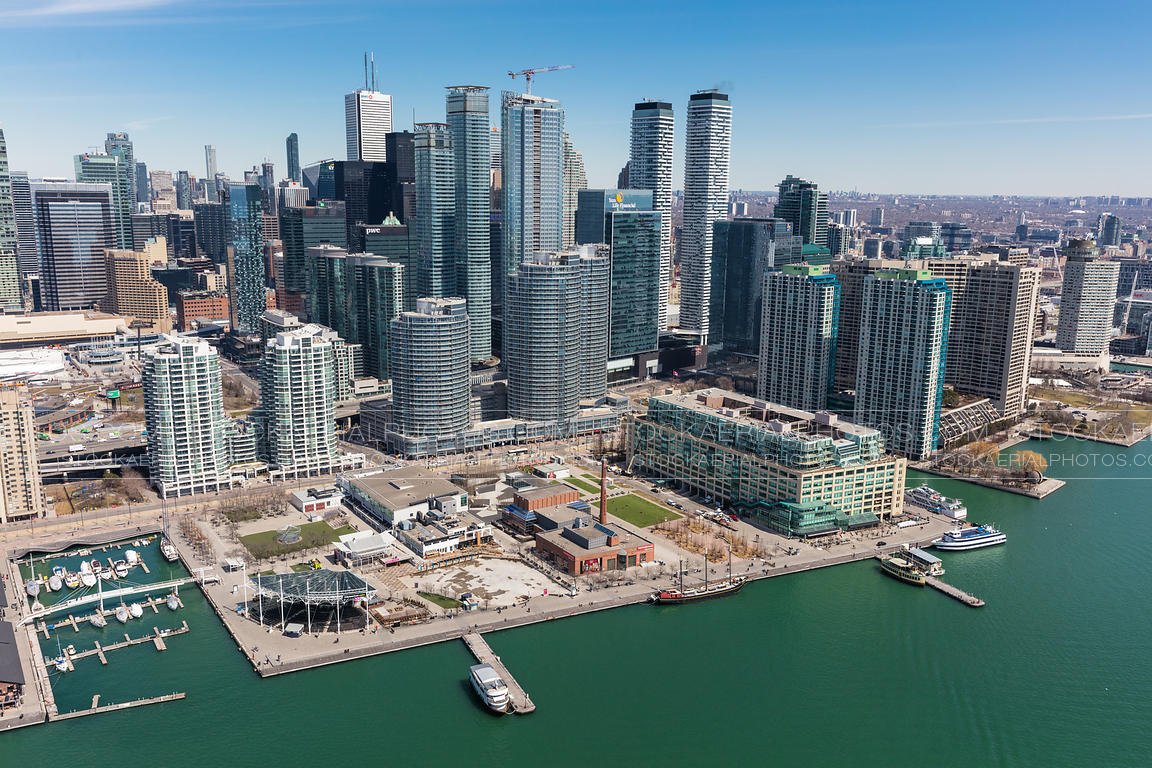
Harbourfront is the city's waterfront, occupying the northern shore of Lake Ontario. One of the neighbourhood's attractions is Harbourfront Centre, a vast gallery space where various exhibitions and performances are constantly held. Four craft studios are also located here, specializing in ceramics, glass, metal and textiles.
Frequent scheduled ferries run from the waterfront to Toronto Islands on three routes: to the eastern shore, Central Island and the grounds of the city airport, Billy Bishop Toronto City Airport. The islands are considered the largest car-free urban area: apart from service vehicles, you will find no other forms of transportation here besides bicycles, scooters, boats, yachts, canoes and so on.
Cabbagetown
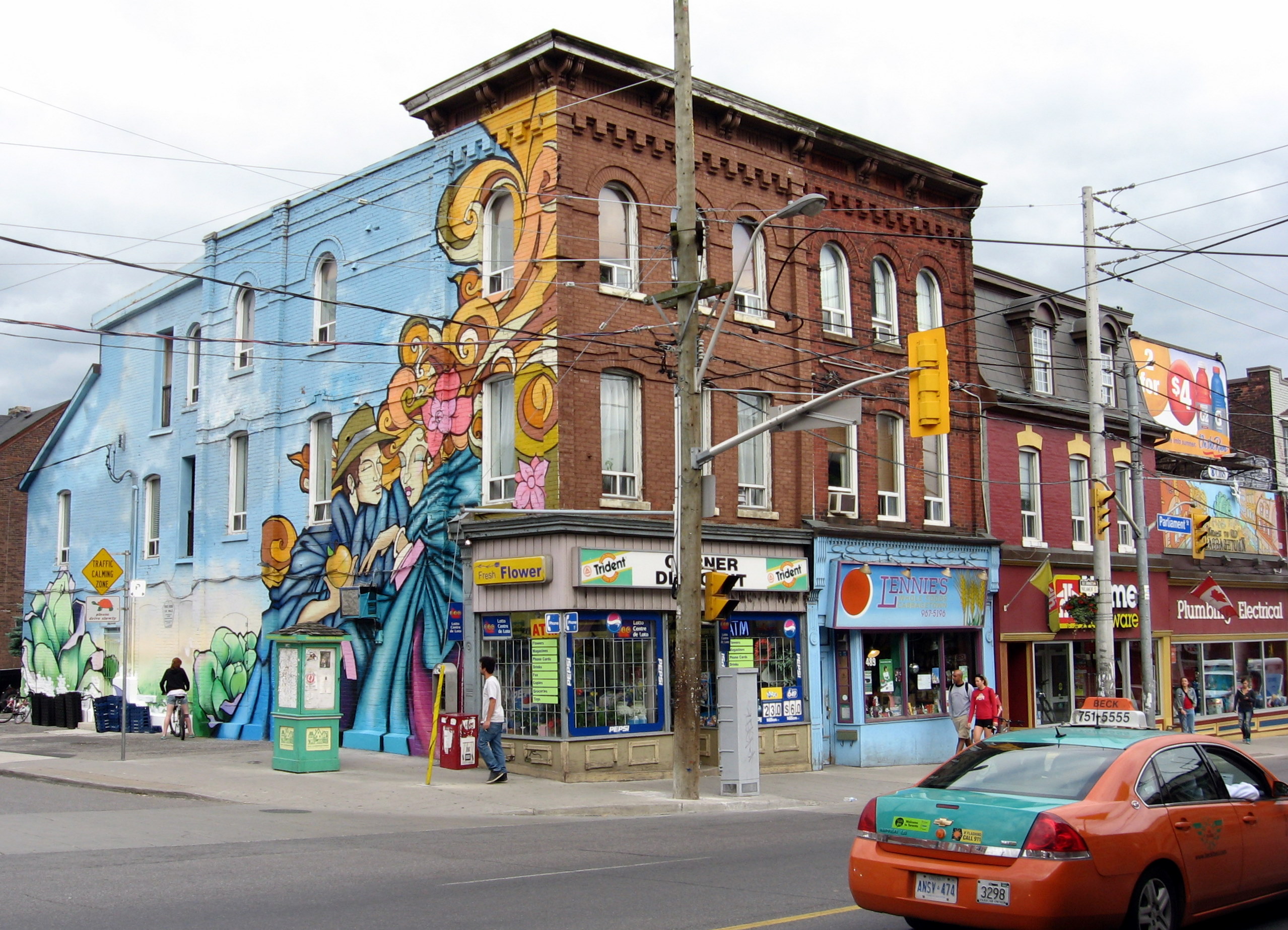
Cabbagetown owes its name to Irish immigrants who grew vegetables on the lawns in front of their homes. Most of the neighbourhood's architecture dates from the late 19th century, when it reached the height of its prosperity. Then the Great Depression began, bringing an economic crisis. In the late 1970s, property buyers began showing interest in the Victorian homes that were abundant in Cabbagetown, and prosperity gradually returned to the neighbourhood.
The neighbourhood's main street, Parliament Street, continues to develop. Here you will find many cafés, pubs and restaurants serving everything from Italian to Thai, South Asian and Mexican cuisine.
If you find yourself in Cabbagetown, be sure to visit Riverdale Farm—an actual working farm in the middle of the city. Two historic cemeteries, St. James and Necropolis, are also located nearby, and walking tours are regularly held there. Riverdale Park West borders the Don River Valley, whose cycling and walking trails lead to the site of the former Evergreen Brick Works, the neighbourhood's cultural and culinary centre.
Corktown
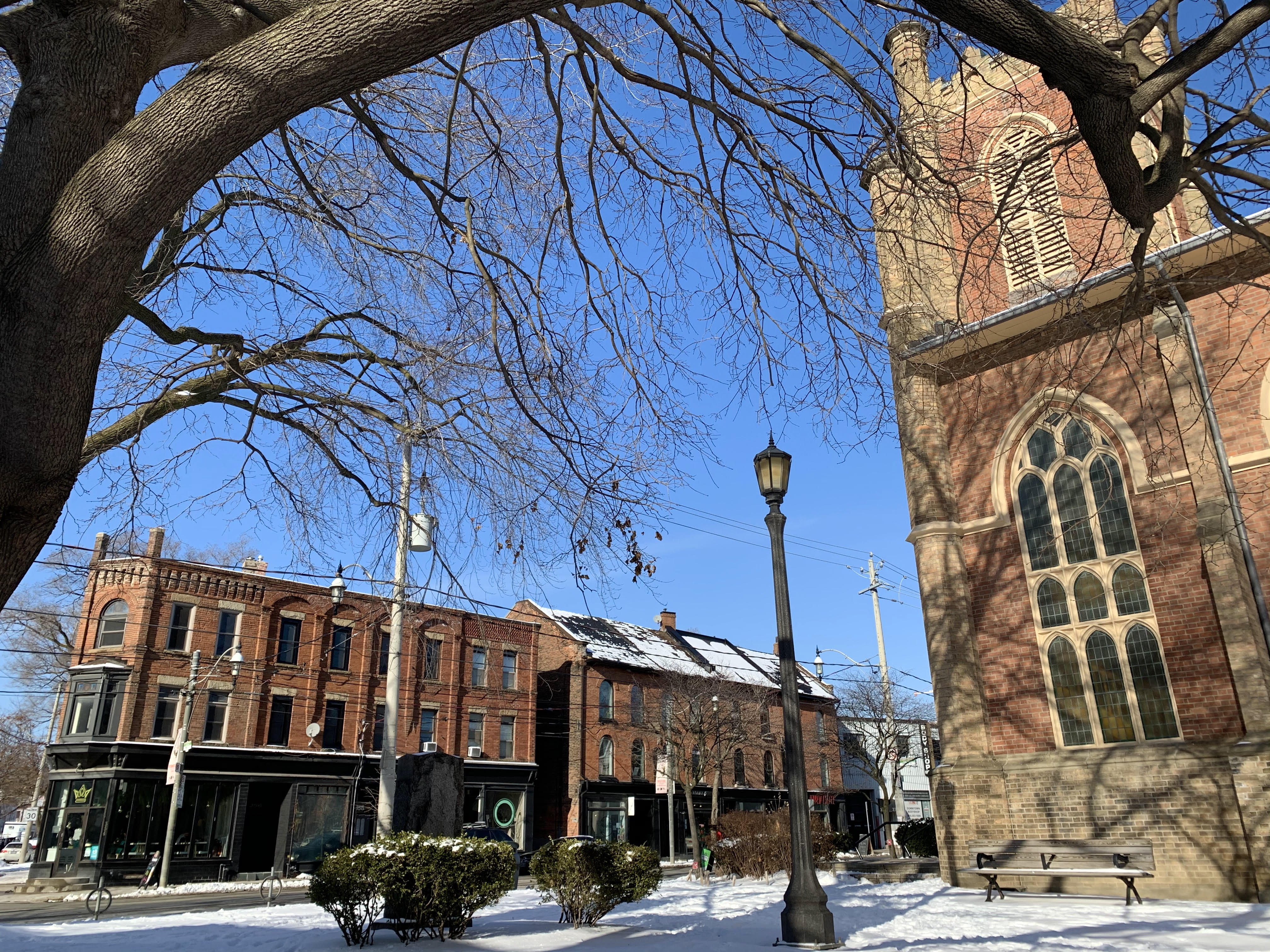
Another neighbourhood that owes its name to Irish immigrants. Most of them came from County Cork, so the neighbourhood was given a similar name. Toronto's first Catholic church, St. Paul's Basilica, was built here in 1822. A parish school was opened at the church for the children of Irish immigrants. In 1889, architect Joseph Connolly began renovating St. Paul's Church based on the model of Rome's San Paolo fuori le Mura, and the church acquired its modern appearance.
Protestants were not left out either and built their Anglican church, Little Trinity Anglican Church, on King Street East in 1843. It is now Toronto's oldest surviving church building.
In 1848, Enoch Turner School was built on Trinity Street. It was Toronto's first free school. Its benefactor was Enoch Turner, Corktown's prominent brewer and one of the city's great philanthropists. The school building now belongs to the Ontario Heritage Trust and is open to the public and for private events.
The Distillery District
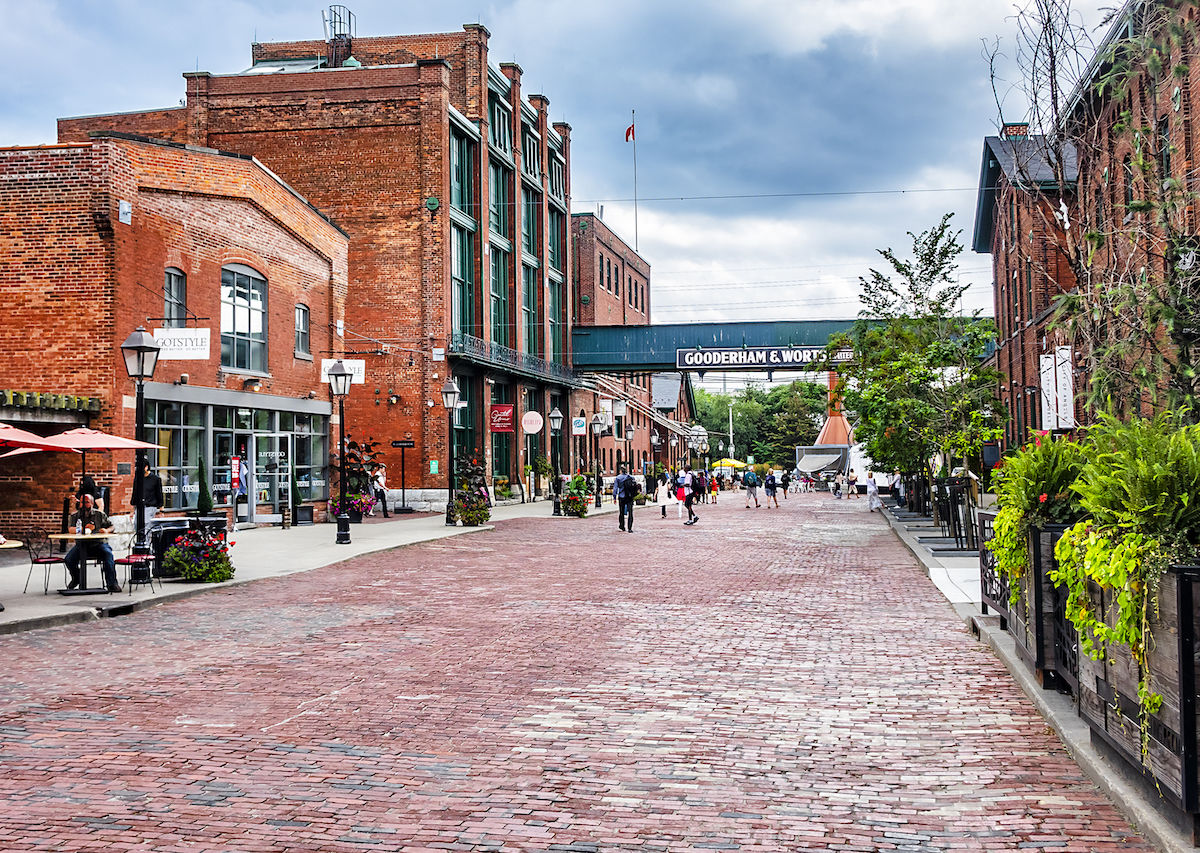
A couple of decades ago, the Distillery District was nothing more than a collection of Victorian-era heritage buildings that once housed one of Canada's largest distilleries, Gooderham and Worts Distillery. However, a group of developers saw different potential in it and decided to turn it into a hub for creative people and entrepreneurs. And they did.
Today, the Distillery is known for its galleries and exhibitions, which make it resemble a blend of a European street and New York's hip Soho neighbourhood. In winter, the neighbourhood fills with the unique spirit of Christmas, as a Christmas market opens there in mid-December, where visitors can buy various designer Christmas ornaments, enjoy German pretzels and listen to Christmas carols.
St. Lawrence Market
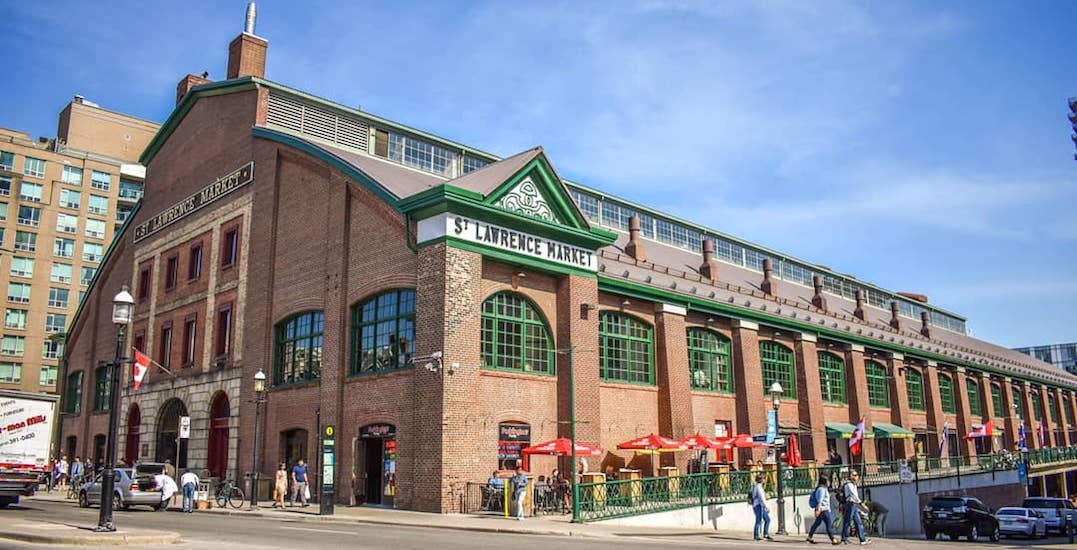
The neighbourhood was named after one of the city's oldest markets. Founded in 1803, the market remains popular with people from across the city and, according to National Geographic, is one of the world's 10 best food markets. Toronto's most famous building, the Flatiron Building (or Gooderham Building), is located nearby. The building is closed to the public, but its ground floor houses a bar that anyone can visit.
Another neighbourhood attraction is Berczy Park, whose centre is adorned with an unusual fountain complex. The fountain is populated by 27 cast-iron dogs and one frightened cat, with a solitary bone rising at its top. The park is popular not only with residents and visitors, but also with their pets.
Kensington Market
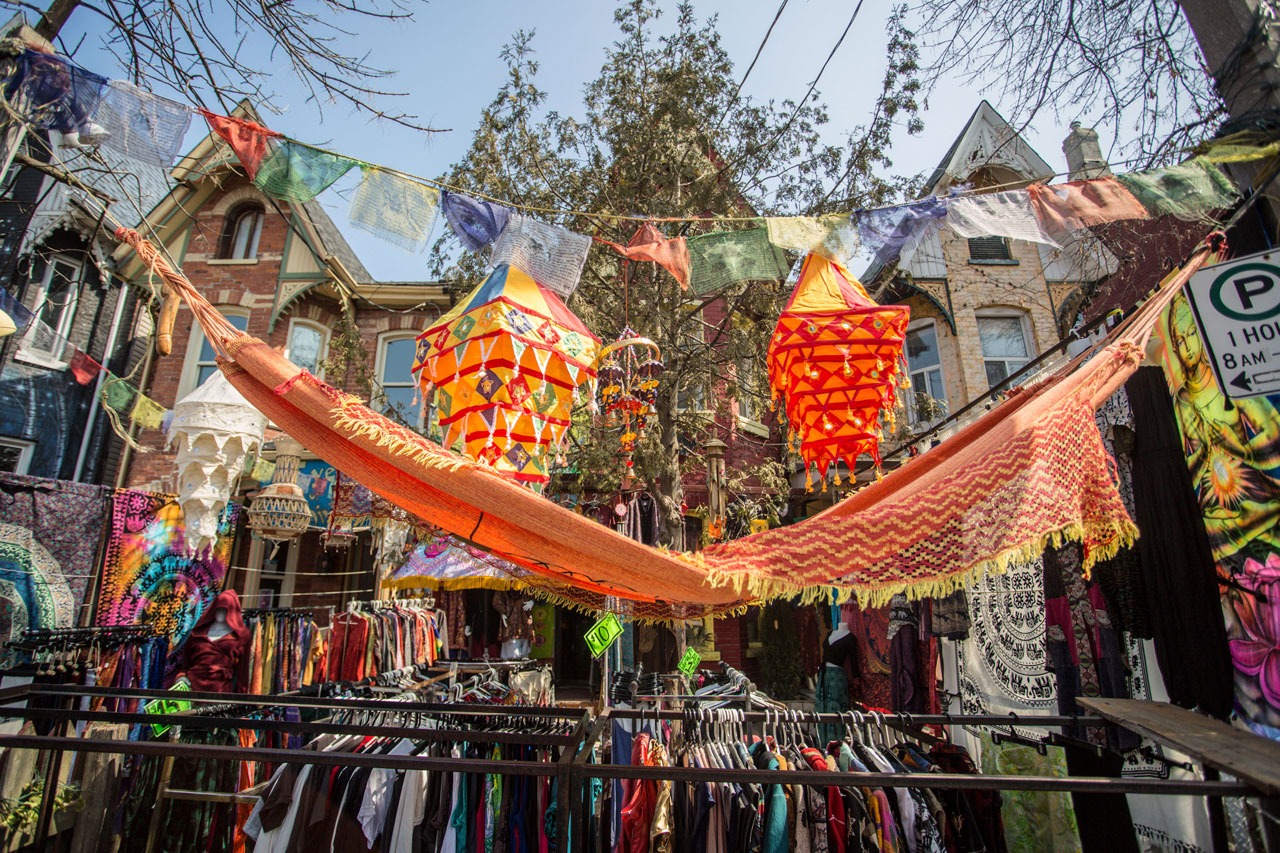
No place in Toronto compares with Kensington Market's relaxed liveliness on a fine summer day. Along with its many bars, cafés and restaurants, you can find shops selling organic food, vintage clothing and a million unusual trinkets. This market is as eclectic as the people who live there. On the market's streets, you can constantly encounter performing musicians, stumble upon various art installations and witness some of the city's most unconventional performances. Kensington Market is the quintessence of music, aromas and flavours from different corners of the world. The neighbourhood has incredible energy, which is why the market is considered one of the city's noisiest places.
You can have a great time outside the city centre too. Here are several more neighbourhoods that deserve your attention:
Queen West
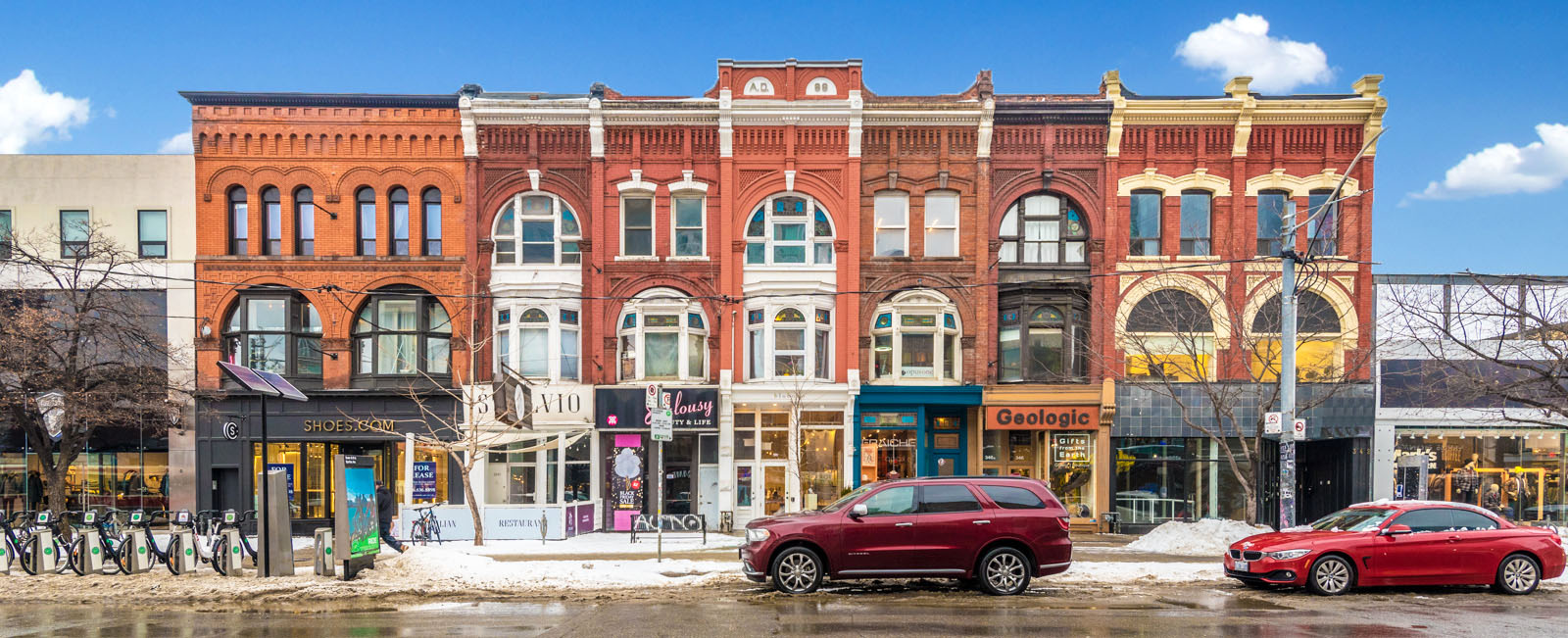
Queen West is the centre of cool Toronto. Vogue named it the second-coolest neighbourhood in the world. Unusual restaurants, boutiques and an incredible number of art galleries have created a bright and dynamic image for this neighbourhood. You can have many interesting experiences here: enjoy charcoal-based black ice cream (it's tasty and healthy!), stroll through Trinity Bellwoods Park, browse antique shops and much more. The 501 streetcar runs along Queen St. West—its route is considered one of the longest in the world.
In addition, fans of abandoned places and Metro 2033 may be interested to know that beneath Queen station there is an unused underground streetcar stop, similar to the one at Union Station. By the way, the city also has an abandoned subway station—Lower Bay. Trains ran through it until 1966, but the city authorities then decided to test a new public transit junction system in which two subway lines split into three. At that time, one platform served the Bloor-Danforth route, while the other served Danforth-University-Yonge. However, the experiment did not work, and the lower platform was closed. Today, Lower Bay sometimes serves as a film set, and during the annual Nuit Blanche arts event, its doors open to everyone.
The Danforth
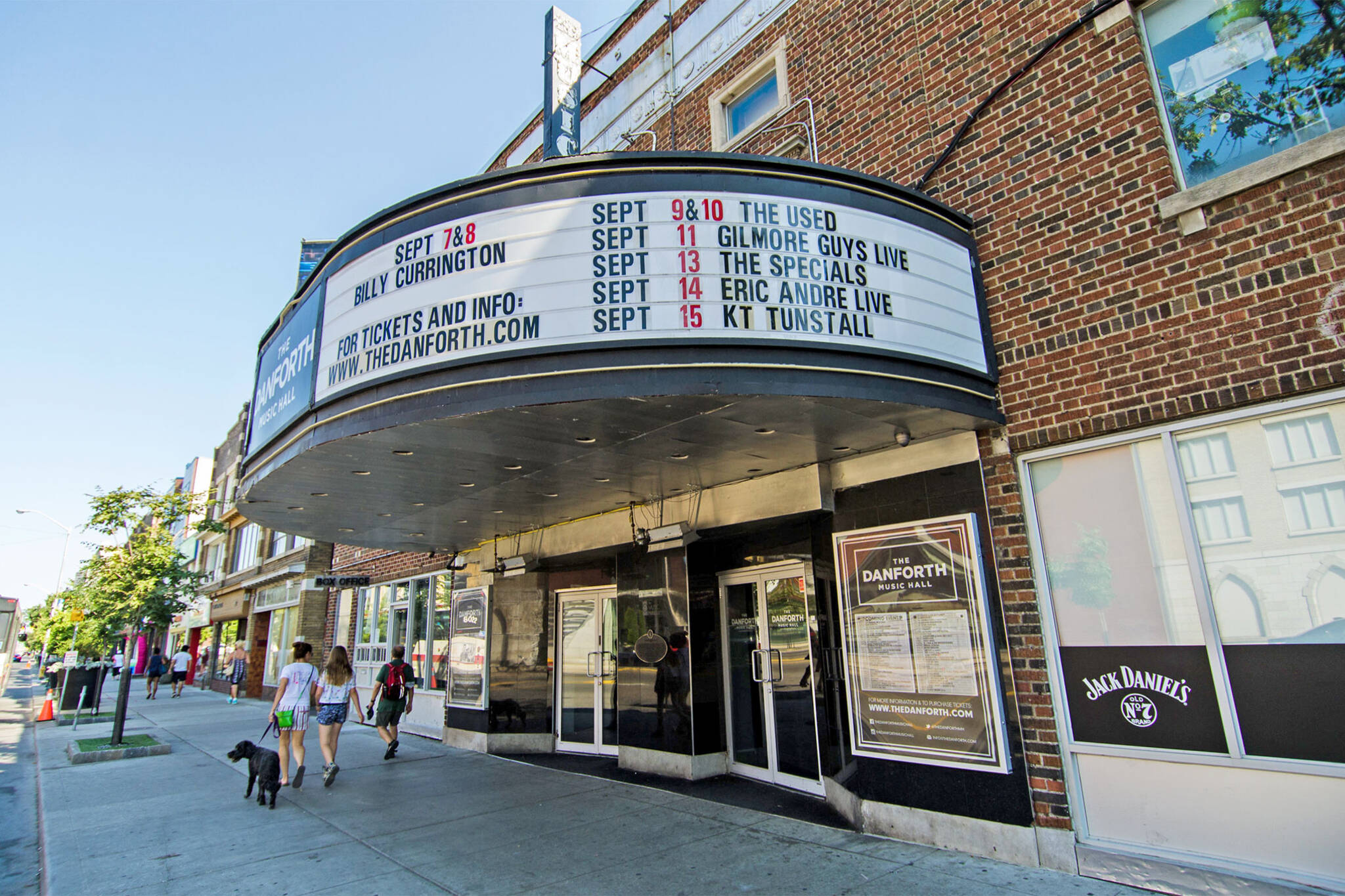
The Danforth is Toronto's Greek town. It was founded in 1907 by a small community of Greek immigrants and gradually became a long strip of restaurants and bars. During the workweek, people there are busy with many important matters, but on Fridays and Saturdays it turns into a nightlife hub. This neighbourhood is home to The Danforth Music Hall, better known simply as The Danforth. Be sure to visit it, even if you are only in Toronto for a couple of days. In addition, every summer the street turns into a celebration of Greek culture called Taste of Danforth, where you can enjoy the full splendour of Greek traditions and sample national cuisine.
The Beaches
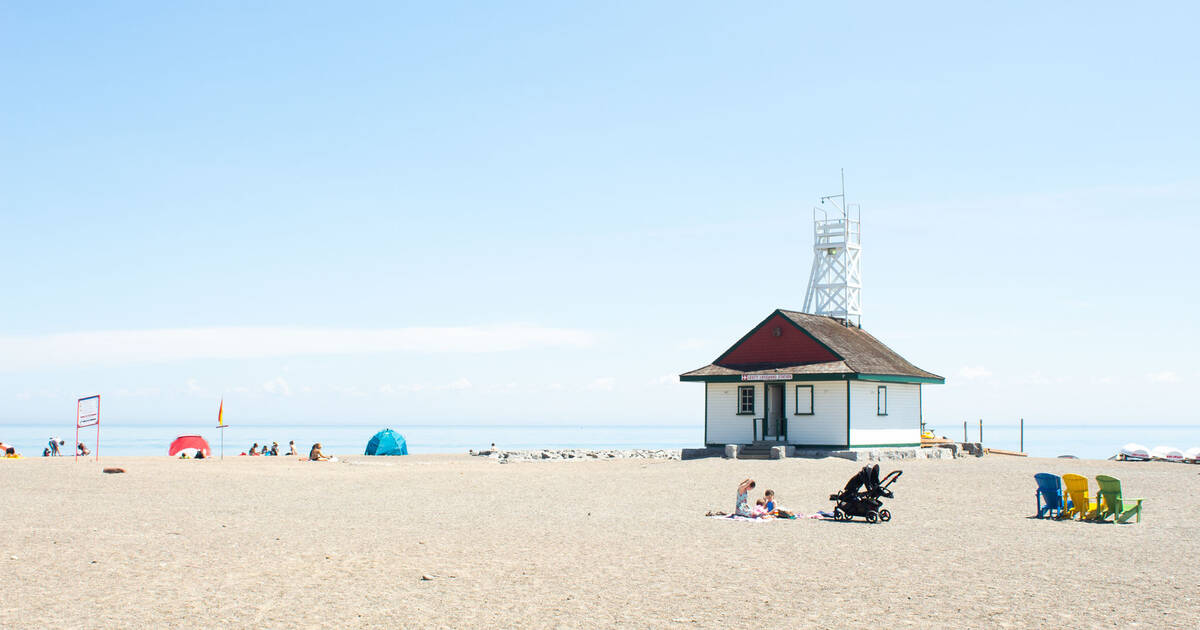
Toronto's Beaches is the type of city neighbourhood that makes you forget you are in a huge metropolis. You can spend the entire summer here playing volleyball, swimming in Lake Ontario and sunbathing on the sandy shore, which consists of four separate beaches: Balmy Beach, Scarborough Beach, Kew Beach and Woodbine Beach. A waving blue flag indicates that the water is clean and suitable for swimming.
One of the popular activities held in this part of the city is the Beaches International Jazz Festival, which attracts the world's best jazz bands and performers.
