Sponsored content
Annual Furnace Maintenance: How to Protect Your Home from Carbon Monoxide
0
Checking gas heating systems, heat exchanger conditions, and flue gas exhaust systems is an essential step to ensure your family's safety.
Last month, we discussed the hidden dangers of gas lines — especially in homes over 30 years old — and the importance of inspecting gas connections during home renovations. However, even if your gas lines are in top condition, you shouldn't overlook another critical component of your home’s system: your gas boiler or furnace.
While heating equipment provides comfort during the cold season, equipment malfunctions can pose serious risks. That is why an annual furnace inspection—a professional evaluation—and regular maintenance of gas heating equipment should be a routine part of responsible home care.
Carbon Monoxide (CO): The Invisible Danger in Your Home
Carbon monoxide (CO) is a toxic substance that is invisible, odorless, and tasteless. It is produced by incomplete fuel combustion, including natural gas, and presents a severe threat if leaked into living spaces.
Furnace malfunctions, combustion issues, or improper exhaust venting can cause CO to be released into indoor air. A damaged heat exchanger requires immediate attention, as defects can compromise safe operation.
Carbon monoxide poisoning symptoms include headaches, dizziness, nausea, weakness, and confusion. Heavy exposure to CO can be fatal.
Children and pregnant women are particularly vulnerable, as carbon monoxide can adversely affect fetal development.
Remember: The absence of smell or visible signs of failure does not mean your heating system is operating safely. Achieving complete carbon monoxide safety requires both working CO detectors and regular professional maintenance.
Why Is Inspecting the Heat Exchanger So Important?
The heat exchanger is a core component of a gas furnace. It transfers heat generated during combustion to the air that warms your house.
Over time, heat exchangers can wear out, corrode, or crack. Cracks and structural defects can disrupt normal operations and create hazards linked to combustion byproducts.
The main issue is that many flaws cannot be identified without a specialized inspection. A furnace may continue running even when individual components desperately need repair.
Therefore, a thorough heat exchanger inspection is crucial for evaluating the system's technical state. A specialist can inspect visible parts, check burner operation, review ventilation and exhaust channels, and perform precise safety measurements.
Regular service helps identify potential issues early and determine if additional repairs are required.
Real Case: A Danger New Homeowners Missed
Specialists at Ingenium Intuite Group Corp. shared a case where a family bought a home and smelled gas about seven days after moving in.
Upon being contacted, technicians inspected the premises and discovered a major natural gas leak both inside and outside the house. According to the team, this case also raised questions regarding the reliability of safety sensors.
This story highlights how critical it is to inspect gas plumbing and heating equipment — especially after purchasing a home, when its actual technical condition may not be fully known.
At the same time, it is vital to distinguish between natural gas and carbon monoxide (CO). Commercial natural gas contains an added odorant to make leaks detectable by smell. Carbon monoxide, however, is completely odorless.
Thus, smelling gas does not indicate a CO leak, nor does the absence of smell mean you are safe from CO. Each hazard requires distinct protective measures.
Is Installing a CO Detector Enough?
CO detectors are a vital part of home safety systems. They detect dangerous concentrations of carbon monoxide and alert residents to immediate danger.
However, having a detector does not eliminate the need for professional furnace maintenance.
For detectors to work reliably:
- Test them regularly using the TEST button according to manufacturer instructions.
- Monitor battery life and replace batteries promptly as needed.
- Check expiration dates and replace units according to manufacturer guidelines.
- Install detectors in proper locations based on manual guidelines and local codes.
Pressing the TEST button verifies internal circuitry, but it does not guarantee accurate detection of actual CO levels in all conditions. Working detectors and professional maintenance must complement each other.
If an alarm sounds, evacuate immediately into fresh air and call 911. Do not re-enter the house until emergency responders confirm it is safe.
What Does Professional Furnace Maintenance Include?
Routine gas furnace maintenance keeps equipment running efficiently and catches potential defects before they turn into costly hazards.
Depending on equipment type and scope of work, service includes checking:
- Heat Exchanger: Inspecting accessible areas for structural damage, corrosion, or cracks.
- Burners & Combustion: Evaluating burner performance and combustion parameters.
- Venting System: Ensuring proper exhaust airflow and clearing obstructions or damage.
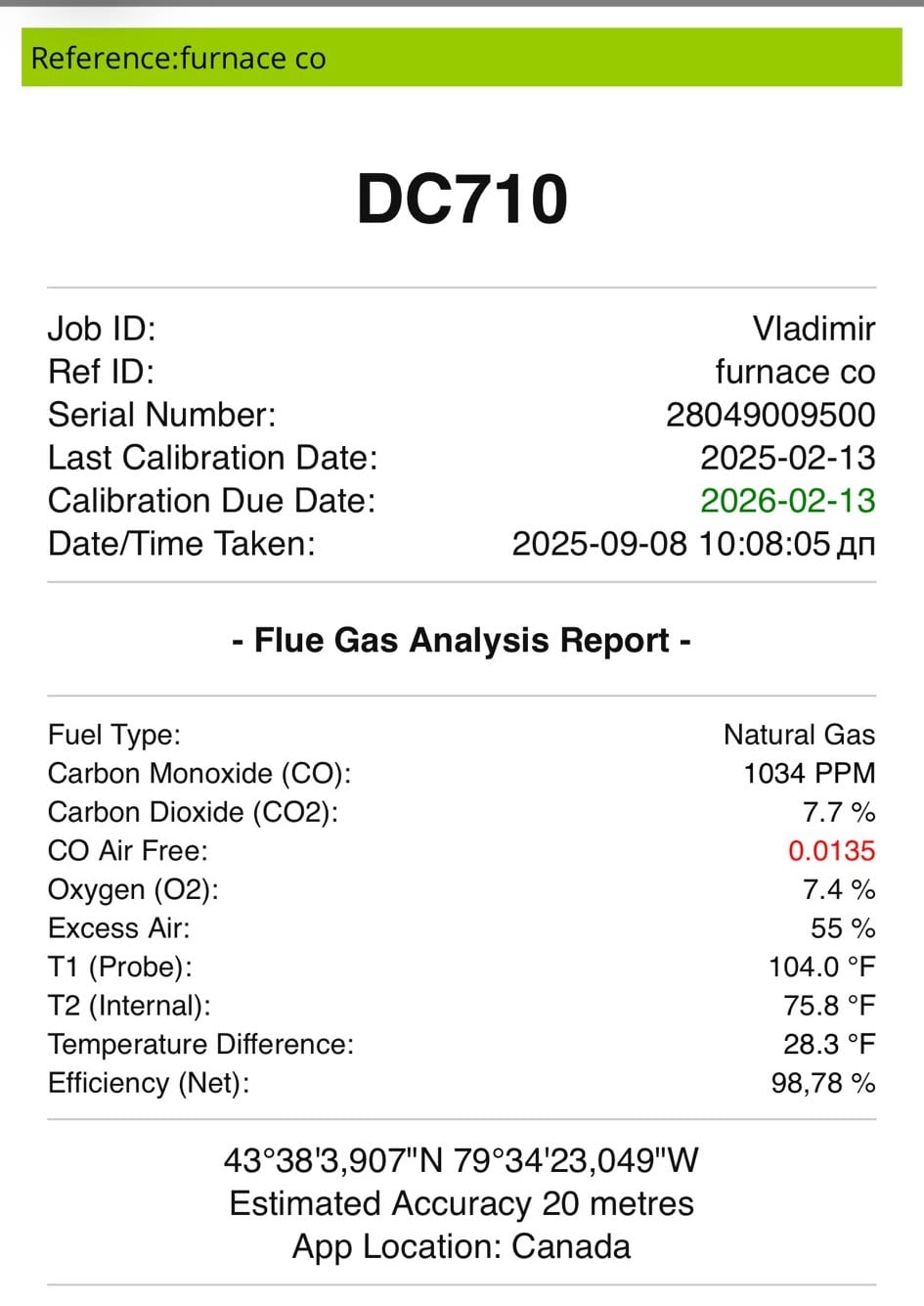
- Combustion Byproduct Analysis: Measuring CO levels and gas dynamics using specialized tools.
- Overall System Condition: Identifying wear and tear or components needing repair.
Ingenium Intuite Group Corp. utilizes advanced TPI measurement instruments for precise flue gas analysis. Once completed, testing results are emailed directly to the client.
This provides clear diagnostic data, giving you full visibility into your heating system's health.
How Much Does Annual Furnace Maintenance Cost?
Protecting your home is easier when pricing is transparent.
Ingenium Intuite Group Corp. offers professional furnace maintenance and inspection for $129 + taxes.
Preventative maintenance identifies minor flaws early, checks system performance, and minimizes operational risks associated with gas equipment.
Don't Wait for Problems — Service Your Heating System Early
Homeowners often think about furnace maintenance only when outdoor temperatures drop and heating runs constantly. However, the best time to inspect your system is before the heating season begins.
Annual professional inspections, proper maintenance, and functioning carbon monoxide detectors are the pillars of home safety.
If you can't remember when your furnace was last inspected, or if you recently purchased a home, don't delay reaching out to specialists.
Contact Ingenium Intuite Group Corp. to schedule your annual furnace maintenance for $129 + taxes.
Take care of your heating system today so you can face the cold season with confidence and peace of mind.
www.clima-cool.ca
(437) 431-6089
Instagram
Last month, we discussed the hidden dangers of gas lines — especially in homes over 30 years old — and the importance of inspecting gas connections during home renovations. However, even if your gas lines are in top condition, you shouldn't overlook another critical component of your home’s system: your gas boiler or furnace.
While heating equipment provides comfort during the cold season, equipment malfunctions can pose serious risks. That is why an annual furnace inspection—a professional evaluation—and regular maintenance of gas heating equipment should be a routine part of responsible home care.
Carbon Monoxide (CO): The Invisible Danger in Your Home
Carbon monoxide (CO) is a toxic substance that is invisible, odorless, and tasteless. It is produced by incomplete fuel combustion, including natural gas, and presents a severe threat if leaked into living spaces.
Furnace malfunctions, combustion issues, or improper exhaust venting can cause CO to be released into indoor air. A damaged heat exchanger requires immediate attention, as defects can compromise safe operation.
Carbon monoxide poisoning symptoms include headaches, dizziness, nausea, weakness, and confusion. Heavy exposure to CO can be fatal.
Children and pregnant women are particularly vulnerable, as carbon monoxide can adversely affect fetal development.
Remember: The absence of smell or visible signs of failure does not mean your heating system is operating safely. Achieving complete carbon monoxide safety requires both working CO detectors and regular professional maintenance.
Why Is Inspecting the Heat Exchanger So Important?
The heat exchanger is a core component of a gas furnace. It transfers heat generated during combustion to the air that warms your house.
Over time, heat exchangers can wear out, corrode, or crack. Cracks and structural defects can disrupt normal operations and create hazards linked to combustion byproducts.
The main issue is that many flaws cannot be identified without a specialized inspection. A furnace may continue running even when individual components desperately need repair.
Therefore, a thorough heat exchanger inspection is crucial for evaluating the system's technical state. A specialist can inspect visible parts, check burner operation, review ventilation and exhaust channels, and perform precise safety measurements.
Regular service helps identify potential issues early and determine if additional repairs are required.
Real Case: A Danger New Homeowners Missed
Specialists at Ingenium Intuite Group Corp. shared a case where a family bought a home and smelled gas about seven days after moving in.
Upon being contacted, technicians inspected the premises and discovered a major natural gas leak both inside and outside the house. According to the team, this case also raised questions regarding the reliability of safety sensors.
This story highlights how critical it is to inspect gas plumbing and heating equipment — especially after purchasing a home, when its actual technical condition may not be fully known.
At the same time, it is vital to distinguish between natural gas and carbon monoxide (CO). Commercial natural gas contains an added odorant to make leaks detectable by smell. Carbon monoxide, however, is completely odorless.
Thus, smelling gas does not indicate a CO leak, nor does the absence of smell mean you are safe from CO. Each hazard requires distinct protective measures.
Is Installing a CO Detector Enough?
CO detectors are a vital part of home safety systems. They detect dangerous concentrations of carbon monoxide and alert residents to immediate danger.
However, having a detector does not eliminate the need for professional furnace maintenance.
For detectors to work reliably:
- Test them regularly using the TEST button according to manufacturer instructions.
- Monitor battery life and replace batteries promptly as needed.
- Check expiration dates and replace units according to manufacturer guidelines.
- Install detectors in proper locations based on manual guidelines and local codes.
Pressing the TEST button verifies internal circuitry, but it does not guarantee accurate detection of actual CO levels in all conditions. Working detectors and professional maintenance must complement each other.
If an alarm sounds, evacuate immediately into fresh air and call 911. Do not re-enter the house until emergency responders confirm it is safe.
What Does Professional Furnace Maintenance Include?
Routine gas furnace maintenance keeps equipment running efficiently and catches potential defects before they turn into costly hazards.
Depending on equipment type and scope of work, service includes checking:
- Heat Exchanger: Inspecting accessible areas for structural damage, corrosion, or cracks.
- Burners & Combustion: Evaluating burner performance and combustion parameters.
- Venting System: Ensuring proper exhaust airflow and clearing obstructions or damage.
- Combustion Byproduct Analysis: Measuring CO levels and gas dynamics using specialized tools.
- Overall System Condition: Identifying wear and tear or components needing repair.
Ingenium Intuite Group Corp. utilizes advanced TPI measurement instruments for precise flue gas analysis. Once completed, testing results are emailed directly to the client.
This provides clear diagnostic data, giving you full visibility into your heating system's health.
How Much Does Annual Furnace Maintenance Cost?
Protecting your home is easier when pricing is transparent.
Ingenium Intuite Group Corp. offers professional furnace maintenance and inspection for $129 + taxes.
Preventative maintenance identifies minor flaws early, checks system performance, and minimizes operational risks associated with gas equipment.
Don't Wait for Problems — Service Your Heating System Early
Homeowners often think about furnace maintenance only when outdoor temperatures drop and heating runs constantly. However, the best time to inspect your system is before the heating season begins.
Annual professional inspections, proper maintenance, and functioning carbon monoxide detectors are the pillars of home safety.
If you can't remember when your furnace was last inspected, or if you recently purchased a home, don't delay reaching out to specialists.
Contact Ingenium Intuite Group Corp. to schedule your annual furnace maintenance for $129 + taxes.
Take care of your heating system today so you can face the cold season with confidence and peace of mind.
www.clima-cool.ca
(437) 431-6089